

Thinking Community / Creating legacy
We are not simply building projects. We are shaping the human habitat.
A community is more than a location on a map. It is more than a subdivision, a development plan, a collection of buildings, or an assembly of individual properties. A true community is a shared human environment — a place where people live, move, gather, work, worship, learn, raise families, form memories, and participate in something larger than themselves.
Where a person lives is not incidental. It shapes daily habits, relationships, opportunities, responsibilities, and identity. The streets people use, the neighbors they encounter, the distance between home and daily needs, the presence or absence of public life, and the quality of the places they share all influence how people understand themselves and one another.
The built environment is not passive. It teaches. It connects or separates. It invites or discourages. It creates patterns of life that become habits, and those habits eventually become culture.
For that reason, the work of community building must be taken seriously. It is not merely a technical exercise in land planning, entitlement, engineering, architecture, finance, or construction. Those disciplines matter deeply, but they are not the end in themselves. They are tools in service of a larger purpose: creating places that support human flourishing.
““Our professional desire is to be creators of communities,
rather than packagers of commodities -
there is a distinction, and it needs to be acknowledged.””
From Commodity to Community
Much of the modern built environment has been shaped by a commodity-based mindset. Land becomes a product. Housing becomes a unit count. Commercial space becomes an asset class. Streets become traffic conduits. Open space becomes a requirement to be satisfied. Zoning becomes a table of permitted uses rather than a framework for civic life.
When viewed this way, the built environment is divided into separate parts, each optimized for its own isolated purpose. Homes are separated from shops. Shops are separated from workplaces. Workplaces are separated from civic life. Recreation is separated from daily routine. Movement is separated from experience. The result is not a complete community, but a scattered arrangement of pieces that require constant travel between them.
A community cannot be created by simply placing commodities next to one another. It emerges from relationship. It depends on the arrangement of homes, streets, public spaces, daily needs, civic institutions, and natural systems in a way that allows life to occur between them.
The value of a true community is found in the whole. It is found in the relationships among the parts. It is found in the way a street supports a front porch, the way a corner store supports a walk, the way a park supports a gathering, the way a neighborhood school supports daily rhythm, and the way a mix of homes allows different generations and household types to belong in the same place.
A community is not simply developed. It is cultivated.
Place Is the Goal
Development can create space. But space alone is not enough.
Space becomes place when it is given meaning through human activity, memory, and experience. A building becomes part of a neighborhood when it contributes to the life around it. A street becomes more than pavement when it supports movement, safety, encounter, and identity. A park becomes more than open land when people use it, care for it, and associate it with shared life.
Place is created when people have reasons to return, reasons to gather, reasons to walk, reasons to know one another, and reasons to feel that they belong.
This is why the work of community building must begin with a different set of questions.
Not simply: How many units can fit?
But also: What kind of life will this place support?
Not simply: What is the market category?
But also: What daily needs will be served?
Not simply: What does the code allow?
But also: What pattern of community does the code produce?
Not simply: How is land consumed?
But also: How is land honored, ordered, and made meaningful?
A place worthy of being called community must do more than accommodate private life. It must also support shared life.
The Built Environment Shapes Us
As our built environment has changed, our understanding of community has changed with it. When daily life is spread apart, people become more dependent on private mobility, private space, private consumption, and scheduled interaction. The more separated the environment becomes, the easier it is to think of community as merely the area where one happens to reside.
But community is not merely geographic proximity. It is not simply a collection of people who live near one another. Community requires some degree of shared identity, shared responsibility, shared experience, and shared ground.
This does not happen by accident. It requires physical conditions that make ordinary human connection more likely.
People need places where they naturally cross paths. They need streets that are comfortable to walk. They need daily needs close enough to become part of the neighborhood. They need housing choices that allow different life stages and income levels to remain connected. They need public spaces that are visible, useful, and loved. They need local businesses that are not merely transactions, but gathering places. They need a built environment that allows people to project outward rather than retreat inward.
The physical pattern of a place can either strengthen or weaken the social pattern of a community.
That is why design matters. That is why zoning matters. That is why development matters.
Zoning Is Civic DNA
Every community carries an underlying code. Some of that code is written into zoning ordinances, subdivision regulations, street standards, building types, infrastructure requirements, parking rules, and entitlement procedures. Some of it is unwritten, carried through habits, expectations, financing assumptions, professional norms, and political culture.
Together, these rules and assumptions form the Civic DNA of a place.
They determine what can be built, what is difficult to build, what is prohibited, what is repeated, and what is slowly lost over time. They shape whether a neighborhood can evolve, whether daily needs can be integrated, whether small-scale enterprise can take root, whether housing variety is allowed, whether streets serve people as well as vehicles, and whether development produces isolated projects or coherent places.
If the civic DNA is misaligned, even good intentions can produce poor outcomes. A community may say it wants walkability while requiring street patterns that make walking unpleasant. It may say it wants affordability while prohibiting the housing types that make attainable housing possible. It may say it wants local business while requiring commercial formats that only large operators can occupy. It may say it wants sustainability while mandating patterns that increase driving, infrastructure burden, and land consumption.
To build better communities, we must examine the code beneath the outcome.
The visible form of a place is often the expression of invisible instructions.
Daily Needs Belong Close to Home
A complete community must provide more than housing. It must provide access to the recurring needs of everyday life.
Food, coffee, childcare, school, worship, work, recreation, small services, civic gathering, and informal social life should not always require leaving the neighborhood. When daily needs are separated from where people live, the neighborhood becomes incomplete. It may house people, but it does not fully support them.
When daily needs are brought close to home, the neighborhood becomes more useful, more social, more resilient, and more humane.
A small market, café, corner store, neighborhood restaurant, workspace, school, park, or civic room can do more than provide a service. It can become a point of encounter. It can create rhythm. It can give people a reason to walk. It can support local enterprise. It can provide a setting where neighbors become familiar to one another.
Daily needs are not secondary amenities. They are part of the infrastructure of community life.
Distinct, Inclusive, and Enduring Neighborhoods
We believe communities should be distinct rather than generic. Every place has its own land, history, ecology, culture, climate, economy, and civic inheritance. Development should respond to those realities rather than impose a standardized product without regard for context.
We believe communities should be inclusive rather than exclusionary. A strong neighborhood should provide ways for different ages, household types, and economic circumstances to belong. It should not be designed only for one phase of life, one income band, one mobility pattern, or one lifestyle preference.
We believe communities should be enduring rather than disposable. Buildings, blocks, streets, and public spaces should be capable of adaptation over time. A durable place allows future generations to inherit something useful, beautiful, and worthy of care.
We believe communities should be complete rather than fragmented. Housing, daily needs, public life, mobility, ecology, and local economy should be understood as interdependent parts of the same human habitat.
Our Work
Our work is rooted in the belief that better places require better alignment between vision, land, design, code, economics, and implementation.
We help communities, developers, landowners, and civic leaders think beyond isolated projects and toward complete places. That means asking what a place is capable of becoming, what rules are shaping its outcome, what patterns of life are being supported, and what must be changed to produce a stronger whole.
This work may involve planning, design, entitlement strategy, zoning reform, development guidance, community visioning, neighborhood structure, mixed-use integration, daily-needs strategy, or the translation of civic goals into practical implementation tools.
But the larger purpose remains the same: to help create places where people can live more connected, resilient, and meaningful lives.
The Legacy We Build
Every generation inherits a built environment it did not fully choose. Every generation also leaves one behind.
The question is whether we will leave behind places that isolate or connect, consume or restore, divide or gather, burden or strengthen. The choices made through land development, zoning, infrastructure, and design will shape daily life long after the original decisions have been forgotten.
Community building is legacy work.
It requires patience, discipline, imagination, and responsibility. It requires seeing beyond the immediate transaction to the long-term life of a place. It requires understanding that the built environment is not simply a reflection of our culture; it is one of the ways culture is formed.
We believe in the enrichment of people’s lives by challenging status quo thinking about how the built environment is generated.
We believe the methods and tools of community building can deliver distinct, inclusive, and complete neighborhoods that provide for the daily needs of the people who live there.
We believe development should create more than space.
It should create place.
We are community builders.
Let’s get this done.
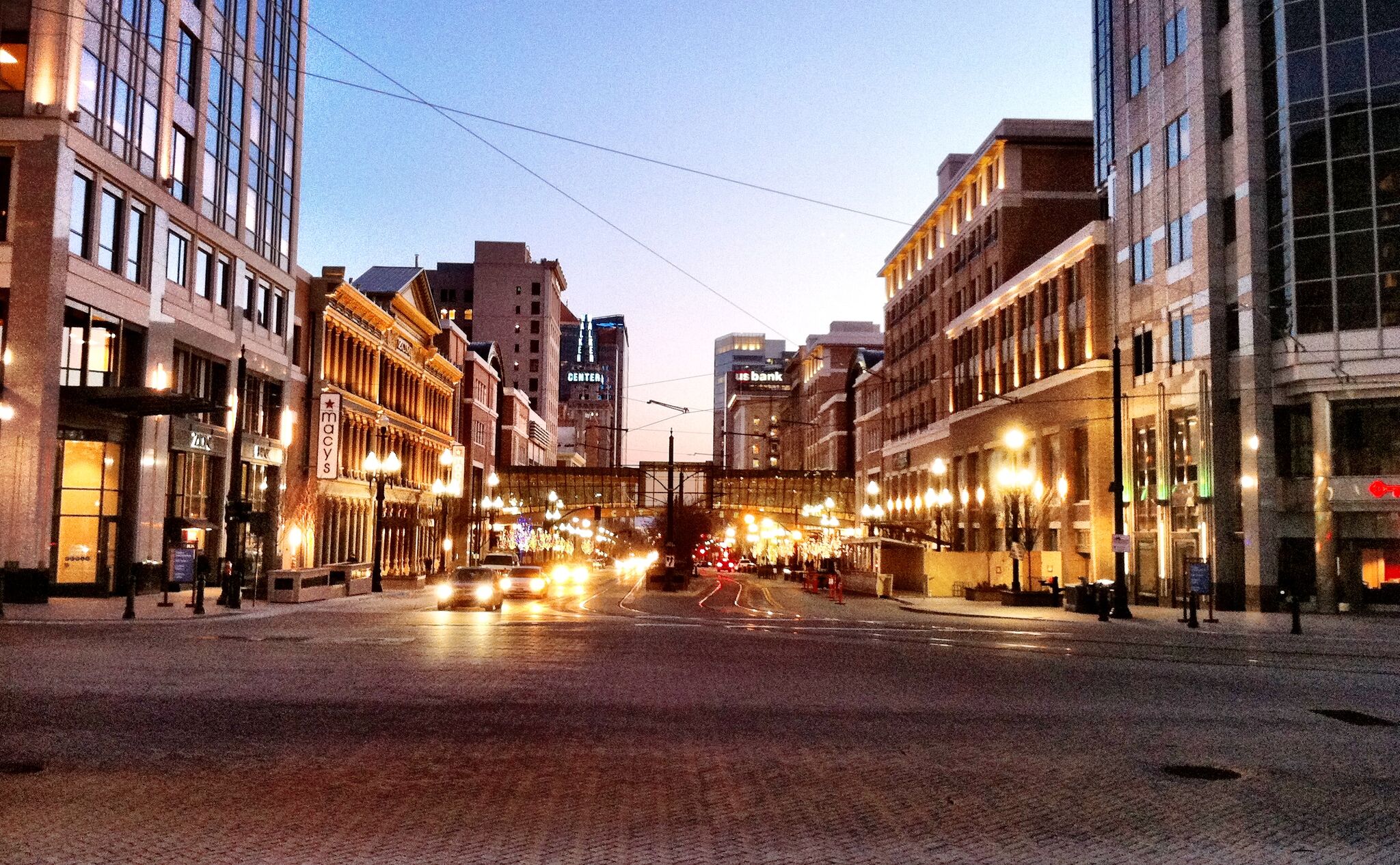
““Space is what development creates.
Place is what human activity and experience - within space - creates.””