Retrofitting Suburbia: A Case Study

Our country is littered with examples of large development projects that have exceeded their useful life and are now in a position of being a financial negative rather than positive. Whether its areas in a city or town that are undeveloped, underutilized, or in need of redeployment municipal governments are faced with a myriad of decisions revolving around these underperforming assets. The analysis of and redesigning for these situations are commonly referred to as “retrofitting suburbia,” which is defined as a method of transforming existing suburban developments into sustainable, and more walkable urban places.

golf-course.png

A few years ago, I was involved with a suburban retrofit project which required a degree of high-level analysis on a golf course that the contracting city was having to subsidize to the tune of about $800k/year. The question the city was asking was the right question – “What alternatives do we have as a city to repair our budget in relation to the financial drain coming from this golf course?” The challenge in asking the question is that many of the solutions have varying degrees of unpopularity. As is the case with many golf courses around the country they did have a useful life for multiple decades. Development occurs around the edges of golf courses and oftentimes the golf course itself is viewed as a private open space amenity that should then remain in perpetuity. Because the full impact of the golf courses financial deficiency is then paid for by all citizens of the municipality that owns the facility it doesn’t feel like the degree of burden that it truly is when compared to alternatives which would remove the economic liability.

In this particular analysis the city gave us as the consultant three scenarios to analyze and offer recommendations based on the findings of each:

SCENARIO 1 – Do nothing: Was there any potential for keeping the golf course intact and potentially sell the course to a private operator to own, care for and manage the facility?

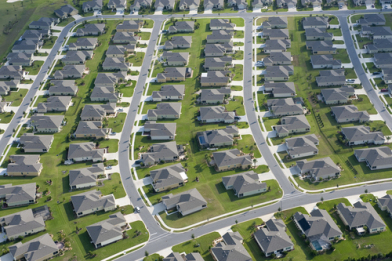
SCENARIO 2 – Single Family Residential (SFR): Sell the golf course to residential developers, allowing the property to infill with single family – large lot – homes as are found on all four sides of the golf course today.

SCENARIO 3 – Mixed-Use / Mixed Density (MU/MD): Sell the golf course, incrementally, for redevelopment of mixed-use/mixed density neighborhoods and centers.

Putting aside all politics associated with the redevelopment of the golf course property there was no argument that could reasonably be made in regards to keeping the golf course running at a present financial loss of $800k/year. This was clearly viewed as being fiscally irresponsible. The question revolved around the correct strategy associated with redeveloping the site as identified in SCENARIO 2 and 3.
sfr.jpg

In comparing these redevelopment scenarios, it also became abundantly clear that the method by which development could potentially occur over time might be a determining factor. Under the SFR scenario selling the entire site to the highest bidder would provide what would appear to be the quickest and cleanest means of liquidating the property and the operating deficit. This scenario would also be saddling the property with a reduced value (based on the typical market requirement for a bulk discount on the sale to offset the long-term carrying cost that a developer would incur for a site of this size). The operating deficit from the golf course would reappear in time with operations & maintenance expenses associated with redevelopment of the property, as infrastructure will be dedicated to the city and become a future liability. This liability would remain on the city’s books, in perpetuity, with no opportunity for relief as they presently have in looking at the potential development of the property as they are considering today. The SFR development pattern is one that has extreme prominence in the area, and thus is something that they would already have an understanding in regard to the subsidy that they are already paying with this low-density development pattern. It is no secret that low density SFR does not pay for itself. It is, as the golf course is presently, a land use pattern that doesn’t pull its weight on the city’s financial ledger. For further reference, the following article is recommended: “The Growth Ponzi Scheme.”

Looking closer at the MU/MD scenario, there are some direct advantages that can be taken with this approach that would provide the city an opportunity to better control their own destiny AND make more money over the long term. A MU/MD approach would allow the city to manage and control their own destiny on a handful of fronts:

First, the city would control the entitlement because they are the governing entity. With the right guidance, they would be able to manage a more robust entitlement package for the property with less pointed opposition because of the manner in which they would be able to address issues that a developer can’t and frankly never will.

Second, the city would have the potential to act as a land bank and control the AMOUNT of property that goes into the market and WHEN those influxes of developable land take place. Since the city has no basis in the land, they would also be able to leverage not having debt as a way of generating opportunities for managing the development process, and in so doing yield more money over time without an up-front value hit as would be experienced if the property is sold all at once – in bulk form.

Third, a MU/MD approach would allow for the generation of revenue other than property tax, while doing it using a development pattern that is poised to generate much higher value due to the lack of supply in relation to demand stemming simultaneously from Baby Boomers and Millennials strong desire for walkable urbanism. For further reference, the following article is recommended: “Boomers, Millennials, and the McMansions No One Wants.” It’s of extreme importance to note that this article is coming from the National Association of Realtors, which cares primarily about selling real estate. You will see in the article that their argument is FOR an MU/MD approach because the market is underserved and it’s what the market is demanding. They also argue that the SFR market is over saturated and will be challenged moving forward because the demand side of that market is shrinking.

Fourth, the city would also stand to generate value on the balance of the property being held with every additional development project that takes place on the land sold into the market for development. This would, again, yield higher returns and further strengthen the city coffers during the development time period of the property as a whole.

Fifth, the development costs associated with MU/MD are less per unit and thus more attractive to developers (especially when paired with the mixed density portion of this equation). For further reference, the following article is recommended: “Smart Growth & Conventional Suburban Development: An Infrastructure Case Study for the EPA

Lastly, due to the political challenges associated with making an argument for decommissioning a golf course that has been in service in the city for multiple decades an MU/MD argument for developing the property can be made solely on the basis of fiscal responsibility if need be. There is a myriad of supporting documentation to demonstrate that an MU/MD pattern for the property will help insure stronger financial solvency.

If you are unfamiliar with the term “retrofitting suburbia” you will become familiar with it, because it is poised to become one of the largest redevelopment opportunities in our country. This golf course example is merely one example of many that have already occurred and many more that will come. As these examples become more prevalent in our work as planners and urban designers it will become imperative to recognize how to identify and analyze the solutions for consideration.


Contact Us

“Are we there yet?”

fork-in-the-road.png

Everyone has either heard or said those infamous words that are virtually guaranteed to be spoken when on a long road trip – “Are we there yet?” When traveling with children it is an inevitability that these words will be spoken. Why is this phrase so common? Many would say it is because of the impatience of a child in wanting to arrive. Philosophically, I believe the message behind this question speaks to an instinct that is a part of our nature as human beings – our innate desire for experiencing real places. The child in all of us craves the arrival to places that play a role in shaping who we are, how we interact with others, and the ways in which we view the world around us.

kids-in-backseat.jpg

Human beings crave enriching places because they are a contributing factor to who and what we are individually and collectively. They are also extremely difficult to come by. Real and authentic places that are self-identifiable because of how they look and how they make one feel are not easy to create because the necessary “DNA” is unavailable. Our dominant land use policies in the United States, which regulate the creation and (re)development of our human habitat, actually contribute instead to our lack of real, authentic places. This needs to change!

The time in which we presently live has us in a very interesting crossroads. “Are we there yet?” No, we are not. When evaluating this, it is clear to see that our efforts to create meaningful places for human development, we are falling far short of what we can and should be producing. We live at a point in time where “stupid” money is no longer viable. Financial markets are becoming more disciplined in terms of where they place investment capital.  Developers are more aware of their need to deliver more dynamic and interesting places in order to stay competitive. Municipalities are starting to grasp they are more accountable for development decisions because they hold title to the long term operations and maintenance of development that occurs in their boundaries. Each of these groups, whether they consciously recognize it or not, hold a stewardship responsibility for delivering better results which means places of physical, economic and social value.

photo-jun-10-11-35-29-am.jpg

When these values are tied to the place making process and are comprehensively considered the end result is the creation of neighborhoods and centers rather than subdivisions and projects.  Our built environment must be considered more than just the output of widgets.  Neighborhoods and centers should emit community.  Community is the outcome of the assemblage of multiple neighborhoods and linkage of centers being designed and implemented effectively so that the whole is greater than the sum of its parts.  When the whole, rather than the individual pieces, is the end goal than you can achieve short term profits and long term vision simultaneously.  Community becomes the greatest and most valuable amenity.

“In  a  neighborhood,  people  buy  the  community  first  and  the  house  second.  The  more  a  place resembles an  authentic  community,  the  more it’s  valued,  and  one  hallmark of  a  real  place is variety.”

(Andres Duany, architect, urban planner and founding member of the Congress for the New Urbanism)

Our margin for error is gone.  We have to do far better than we have done over the past 80 years.  If those who play a professional role in the creation and management of our built environment can collectively learn to think this way we will begin to be able to answer YES to the question of “Are we there yet?”

img_1860.jpg

“When  selling  community it must be  done through  emphasizing inclusiveness and neighborhood, because  every  new  home  adds to  the  amenity  when  this is  done.  Since conventional suburban development instead emphasizes exclusivity and privacy every new home instead is perceived as a threat.”

(Vince Graham, developer of I’on – Mt. Pleasant, South Carolina)

Utah's Race to Deliver Affordable Housing

Utah has been fighting a losing battle against the delivery of affordable housing for at least the past decade.  The present battle dates back to the Great Recession which hit its peak in Utah back in 2008.  The Great Recession offered an opportunity to look at bad habits and to restructure common practices - in the way of policy, economics and market practices. 

At that time home prices were peaking across the country.  Utah, being a much more conservative market than many others, didn’t experience the steep run up in home prices experienced in other markets.  They did experience a run up, but not to the likes of Phoenix or Las Vegas.  The silver lining in this is that Utah also didn’t experience the sharp drop off that other markets had to weather.  Utah wasn’t exempt from the pain delivered during the trough of the Great Recession but were fortunate to have not experienced the catastrophic levels of pain that were exacted in markets where continual real estate growth was part of many state and municipal economic development strategies.

This previous experience is raised as one of warning for where we sit today.  The writing is on the wall as home values have again artificially sky rocketed.  The reasons for the run up in prices are different, but the results are similar as what we faced in 2008.  We lack the proactive forethought in how to deliver solutions for providing affordable housing.

During the 2019 Utah State Legislative Session Senate Bill 34 was passed.  SB-34 placed the requirement on local government to plan for and report their strategies of housing residents of all income levels.  The process for this is addressed through long range planning that occurs with a city’s responsibilities associated with updating their General Plans.  While the requirement for including an affordable housing strategy within a General Plan have existed since the 1990’s, SB-34 clarifies generalities in the requirements and provides more specific direction in the delivery of data regarding current conditions along with strategies for delivery and implementation within the context of a five year plan.

As this requirement is undertaken, and cities begin to account for their level of compliance in providing affordable housing within their respective boundaries, it will become quite apparent how unfriendly the environment is towards providing adequate housing for those who are lower middle class and below.  Many cities will then begin the process of fixing the problem while others will continue to ignore, feeling it reasonable to shift the burden to neighboring municipalities.  While extremely discriminatory in nature, economic segregation remains a legal instrument for disallowing the inclusion of certain demographics which fall within lower end income classes.

For those communities which recognize the current error in their policies towards affordable housing and want to take an inclusionary approach to fixing these problems, here are five recommended strategies that can be undertaken to deliver solutions.


1.    CHANGE THE DNA

DNA.png

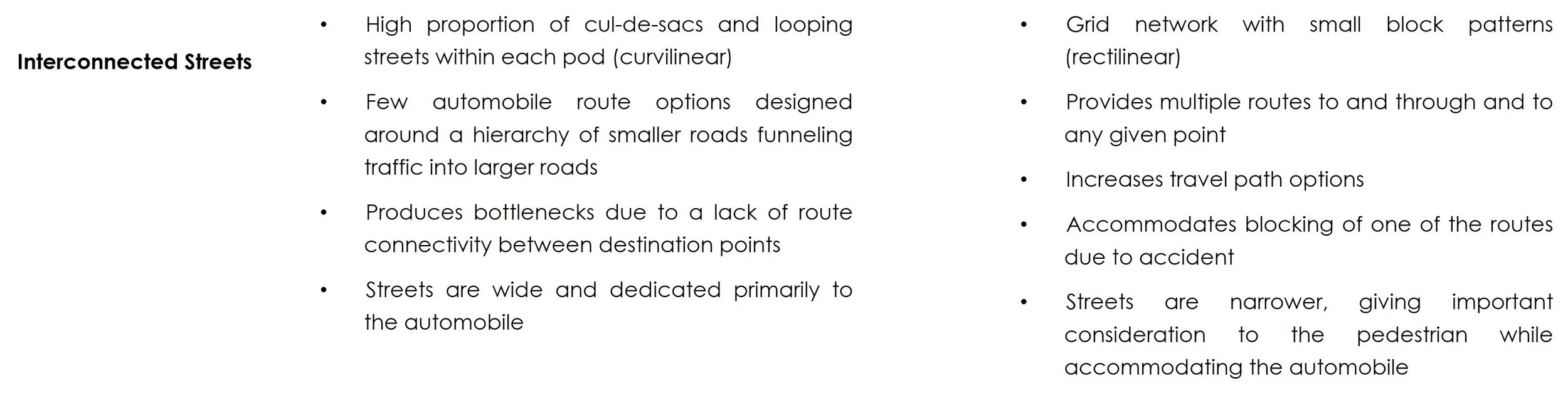
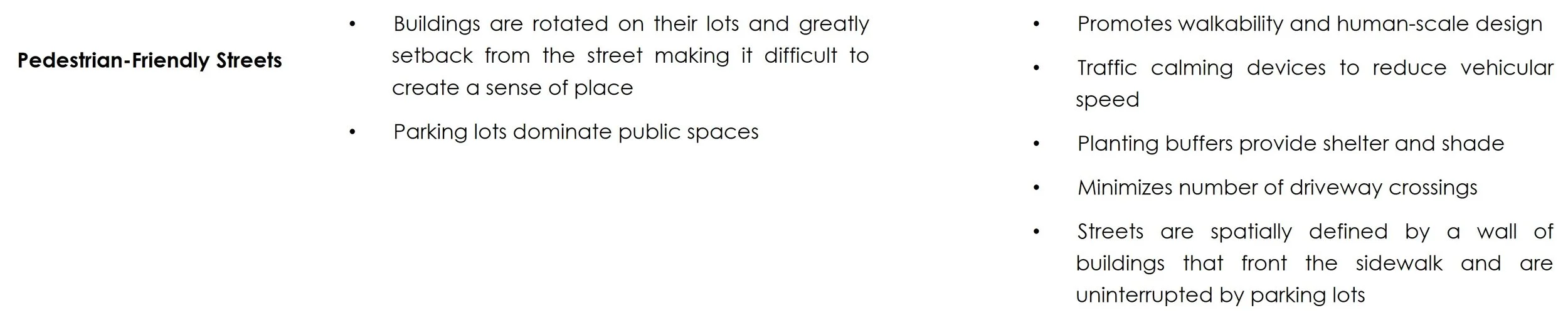
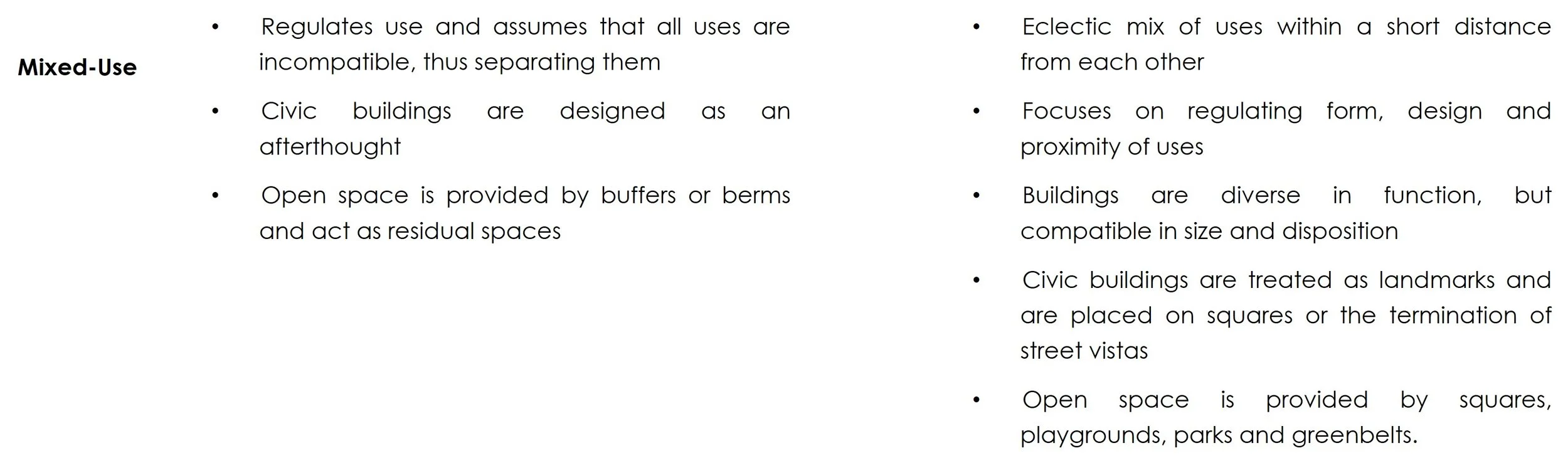
The development rules for providing affordable housing are completely wrong.  They breed an “us versus them” environment as it pertains to those who need/require affordable housing options.  The predominant issue is that conventional zoning demands the hyper segregation of uses, which includes a fine-grained separation of housing types even though the use is the same.  This means that the distribution of affordable housing is required to be delivered in large pods which concentrates the demographics associated with affordable housing.  This concentration and segregation produces a “Nordstroms -vs- Target -vs- Wal-Mart” mentality.   This type of strategy can only be generated at the DNA level of community-based zoning.  Zoning needs to be established which, instead, breeds an inclusive environment.  Housing types should be blended within the same neighborhood, rather than demanding a segregated environment that is based upon income.

The palette of available housing types needs to be expanded past the three general housing types which conventional zoning typically allows (single-family detached, single-family attached [townhomes], and stacked flats [condos/apartments]). There are a myriad of “missing middle” housing types which conventional zoning has regulated out of use and now require reintroduction through methods of zoning reform.

The zoning reform required to expand the palette of available housing types should enable the blending of different housing types within the same neighborhood. This would provide opportunities for entry-level homebuyers to move up within the same neighborhood and for older residents to age-in-place in their same neighborhoods.  With proper physical form, differing housing types can exist at the same scale.


 2.    LEGALIZE ACCESSORY UNITS

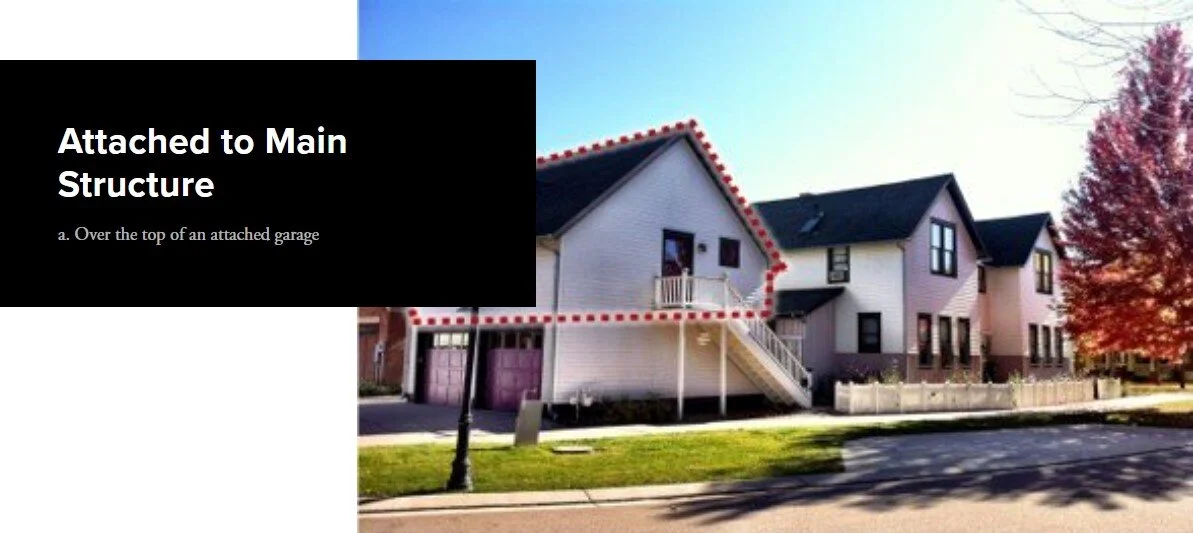
By definition, an accessory unit is a self-contained housing unit that is an “accessory” to the main residence.  Accessory units must have a separate ingress/egress from the main residence while sharing the same utility meters.  Accessory units must contain a bathroom, stove and sleeping area.

Accessory units typically come in three types:

ADU - Inclusive.jpg
ADU - Attached.jpg
ADU - Detached.jpg

Accessory units are a way to directly impact housing affordability through allowing a community’s residents to act as part of the solution (at their choice), implementing through a city-wide ordinance to disburse (rather than concentrate) the demographics of those who require affordable housing opportunities, and having a result that doesn’t cost taxpayers millions of dollars to fund, because it’s a market-based solution.

Accessory units are the most effective way of providing density within a neighborhood while simultaneously providing the lightest impact to the neighborhood. It allows the property owner to be selective of the occupant because they are sharing space and utilities.It permits for the property owner to subsidize their own mortgage with the rent from the accessory unit.It allows for an inclusion of an important demographic within an otherwise homogeneous neighborhood. It provides for the social mentoring of a demographic group that would otherwise be forced to segregate and concentrate away from the mentoring demographic. It permits the property owner to closely supervise needs within their immediate family while simultaneously providing both dignity and privacy (i.e. a newly married child, a single parent relative, or an older parent).


3.    DISTRIBUTE AFFORDABLE HOUSING RATHER THAN CONCENTRATING IT

As referenced earlier, due to the impacts of conventional zoning practices housing is required to concentrate by density (dwelling units/acre).The prevailing result of this practice is that neighborhoods output in a homogeneous fashion, primarily through the economics of home values.Each neighborhood isolates from others within narrow bandwidths of home values keeping a tight separation of the associative demographics which often accompany household median incomes.Thus, the last form of legal segregation in this country is exposed – economic segregation, and the accompanying discrimination against the villain of many a City Council meeting – “THOSE PEOPLE.”

The impact of disbursing housing types attributable to affordable housing solutions throughout a neighborhood and community are positive on multiple fronts. To name a few, the effort allows for mentoring opportunities between those that “have” and those that “need”; it provides for the mutual sharing of resources between neighbors, both in terms of time and materials; it embeds the work force citizens of a municipality (i.e. public safety, educators, government staff) to both work and live in the communities they serve, rather than being forced to leave at the end of the work day.

Apartments.jpg

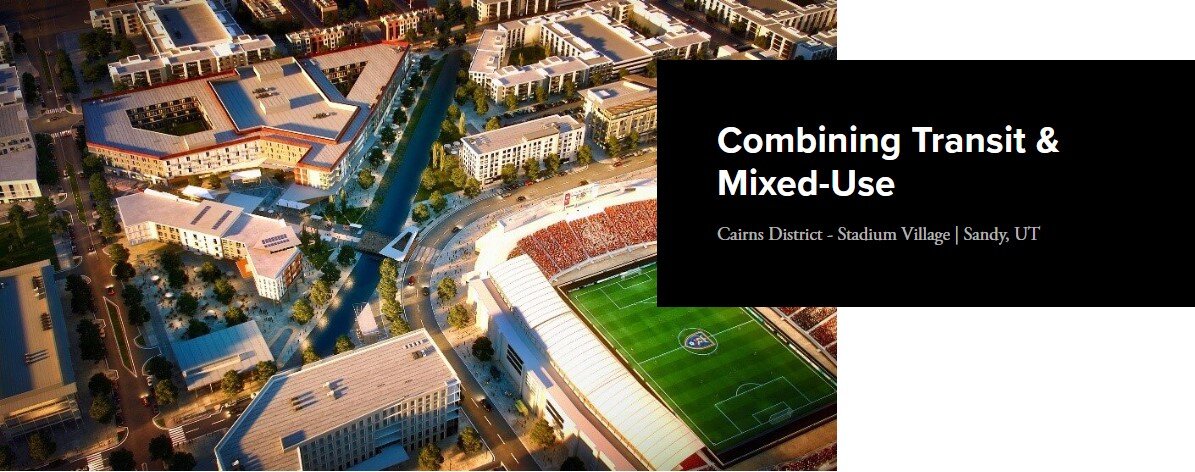
4.    LOCATE AFFORDABLE HOUSING ADJACENT TO TRANSIT AND MIXED-USE ENVIRONMENTS

Often, those who are reliant upon affordable housing options are faced with a “double whammy” because of the combined impact of housing and transportation on their household budget.  The opportunity to combat this condition, as municipalities look to making future corrections, is through flipping the “double whammy” on its head by providing for proximity advantages in planning for affordable housing options to have proximate adjacencies to areas of mixed-use and transit access.  If transportation costs can be either eliminated or minimized by offering daily needs shopping (through mixed-use development) and regional transportation options (through transit proximity) within a walkable environment, then the quality of affordable housing alternatives can be increased by the offset in the necessity of an automobile within one’s household.

To accomplish this objective there are a myriad of current impacts which must be created, altered or eliminated based on existing DNA (refer to #1).  Mixed-use requires greater levels of development intensities as do legitimate transit alternatives for those who are often overly reliant on transit.  These types of alterations are often feared by those who tend to favor lower densities and homogeneous neighborhoods.  Opportunities for both can effectively be provided without having to upset the balance, and this is done through providing for #5.

Transit & Mixed-Use.jpg

5.    EXPAND OPPORTUNITIES FOR MARKET-BASED CHOICES

Most of the fear generated by the inherent changes that are needed to produce healthy environments for affordable housing alternatives stem from the historically bad examples that exist all across the country.  The delivery systems of our most recent past are tied to DNA that would not allow for proper approaches to be taken.  There are also examples of government overstepping their bounds and forcing solutions on communities that ultimately became human travesties (i.e. Cabrini Green and Pruitt Igoe). There are still ideas of discrimination that exists which generates artificial fears regarding “THOSE PEOPLE” being too closely connected to one’s community.

This is where it becomes critical to seek out any and all solutions that are market-based in their implementation.  Those market-based solutions must be available at both the developer as well as the consumer stage.  There are a multitude of intricate ways in which these market-based solutions can be provided, which then allows for developers and consumers to opt-in based on their level of comfort.  As successful strategies provide successful results the willingness of many to opt-in will be strengthened.  For the one’s who fear their proximity to “THOSE PEOPLE” there is and will continue to be a multitude of homogeneous options that they can choose from. 

The idea to remember in all of this is that the level of choice regarding where one can live differs greatly due to household income. We don’t all have access to the same set of resources/opportunities, and thus the level of choice drops significantly the lower that financial resources are available. The degree to which opportunities of choice can be expanded, through a collective spirit of inclusiveness, the stronger and healthier our future communities can become.

People and Place: Learning from Horror Films

People and Place: Learning from Horror Films

Much of what we experience in regards to our built environment consists of places (body) which are devoid of people (soul) because the ill-intended output in many cases is that of creating a machine as opposed to a living organism. Much of what is developed, using current practices, creates horror film conditions – environments that are arguably best suited for the undead, rather than the living.

The “Baby Bear” Metrics of Porches

goldilocks.jpg

In the story of “Goldilocks and the Three Bears,” aside from learning that breaking and entering is still a crime, even when it’s a home inhabited by a bear family with human-like characteristics, there is an even more important principle that we can learn.  I like to refer to it as the “Baby Bear metric.”  The porridge, chair and bed of the Bear family’s mother and father are too hot, too cold, too big, too small, too hard, and too soft.  As Goldilocks moves through the house of the Three Bears she finds that everything belonging to the family’s baby bear happens to be “just right” for her.

This idea is applicable to any of a number of things in life.  The same thing, depending on such things as context, scale and size can be off to a user, but when slight adjustments are made it can then be found to be “just right.”

porch-activation.png

To understand the “Baby Bear” metrics associated with a front porch one must first understand its purpose and reasoning for existence in the first place.  Historically, the front porch has served a critically important purpose in the role of a home.  The front porch often provided the most versatile space in a home because it provided cover and shelter while also providing a form of social access.  Porches have tended to serve an intermediary role between the public nature of the street and the private nature of the house.  They have tended to function as a living room, of sorts, that is neither fully private nor fully public.  The front porch also served in allowing for natural climate control prior to the incorporation of central air conditioning in a home.

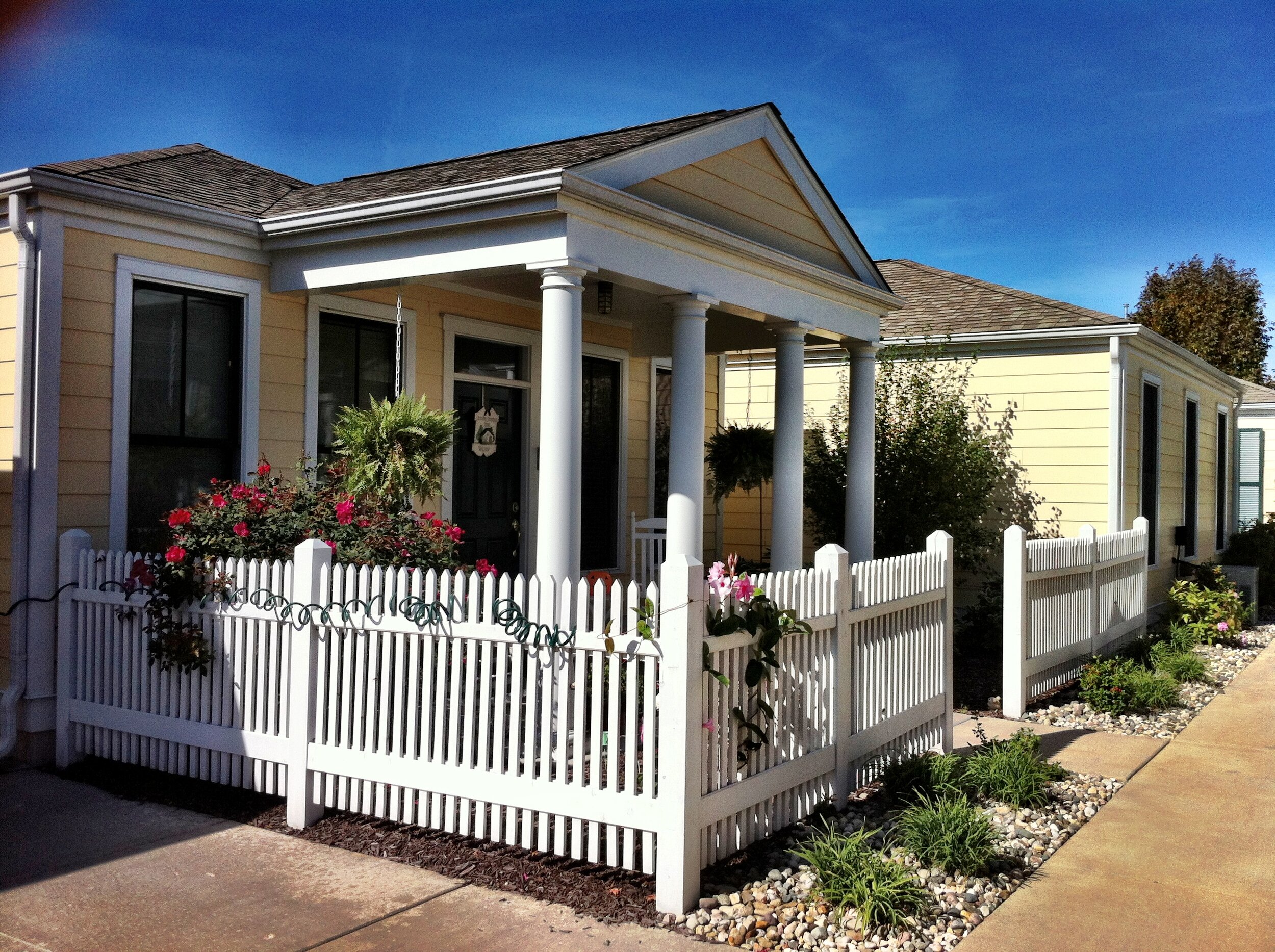
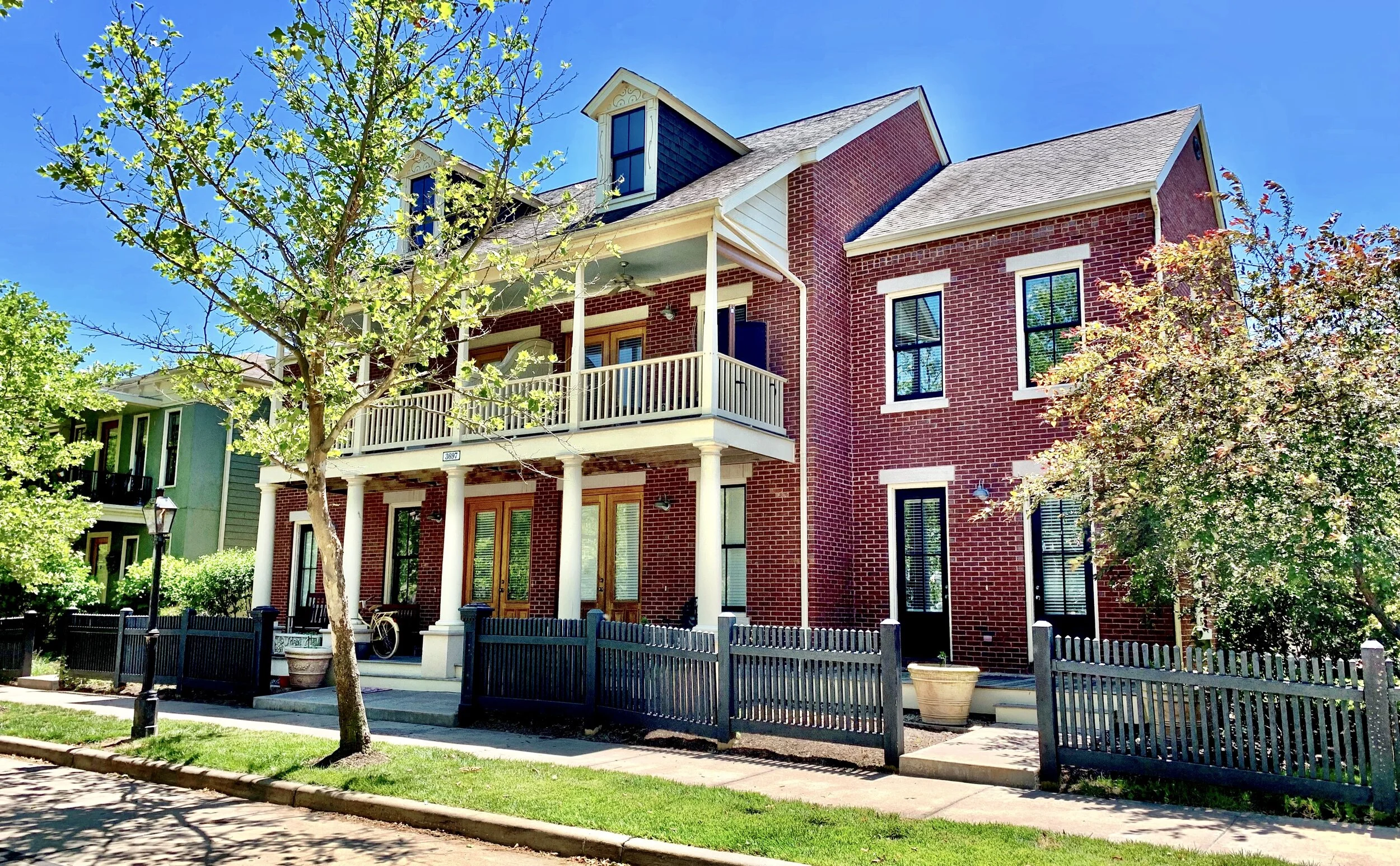
The role and value of the front porch almost fell into extinction with the onset of indoor climate control and the dominance of the garage in most single-family homes.  Porches became kitsch because of improper design and execution.  With the newly found importance and emphasis on walkability and social engagement in community design the reinstitution of the front porch has become an important tool.  The problem though is that unless the “Baby Bear” metrics, associated with a front porch are properly understood and implemented, porches can be utilized incorrectly and thus lose their value and purpose.  The “Baby Bear” metrics of the front porch are tied to DISTANCE, HEIGHT and DEPTH.

DISTANCE

horizontal-layers.jpg

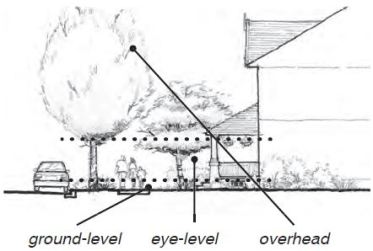
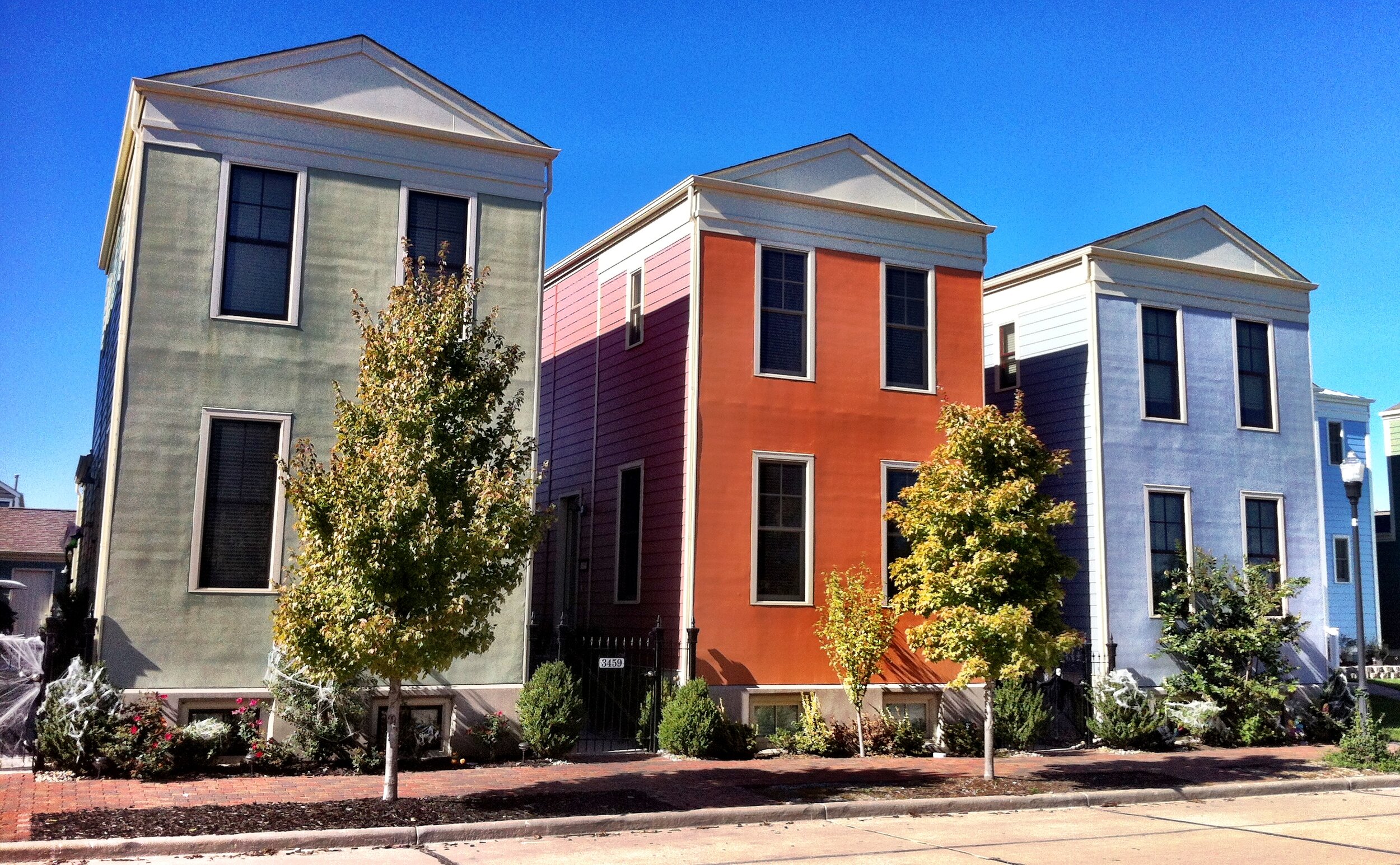
The relationship between porch and sidewalk is a critical one if a porch is going to work correctly.  The reasoning behind this is tied to the horizontal layering that exists between porch and sidewalk.  Within the regulatory governance that exists between the public and private realm, the sidewalk is considered part of the public right-of-way which also includes the street.  Typically the public right-of-way measures from the back of sidewalk on one side of the street to the back of sidewalk on the other.  From the back of sidewalk to the face of the front porch is a semi-public space that makes up the front yard of a home’s lot.  Within that space is the establishing relationship that sets the first transition from public to private realm.  This is where lawns, planting beds and fencing serve in the beginning stages of formalizing privacy relationships.  When the porch is too close to the sidewalk the personal space relationship is violated and privacy is lost – if it’s too far away the social engagement opportunities are lost.   Front porches require a “Baby Bear” metric of no more than 12 feet and no less than 8 feet in order to provide the necessary distance to balance the public realm – private realm relationship.


HEIGHT

The vertical nature of the porch and sidewalk is also important in the public – private realm relationship.  Keeping in mind that the porch is considered semi-private space (based on the horizontal relationship) when the height of a porch is non-existent (same elevation as the sidewalk) the privacy relationship is altered and respect for a porch user’s privacy is violated.  Subsequently, if the elevation of the porch is too great a sub-conscious relationship of dominance is projected, between sidewalk and porch, thus eliminating the social engagement opportunities because respect between the two is eliminated.  Front porches require a “Baby Bear” metric of no less than 18 inches and no greater than 30 inches to allow for the ideal height relationship to exist.


DEPTH

porch-depth.png

While the depth of a porch may seem to be an inconsequential factor it actually has a tremendous impact if not dealt with correctly.  The depth of a porch will make or break everything else because proper depth will determine whether a porch is usable or not.  During the advent of the porches comeback it has often been implemented incorrectly, only being thought of as a visual element in the façade of a home.  When this line of thinking is used the porch is often designed with only enough depth to appear as a porch from the street and sidewalk.  In this instance the porch can only be used to store a bicycle or two (at best) because it doesn’t provide enough depth in order to be inhabited without a knowledge of advanced yoga poses.  When this is the case the porch typically has a depth of less than 6 feet.  For a porch to be usable and inhabitable it must have a ”Baby Bear”  metric of a minimum depth of 6 feet and can have a maximum depth of a small living room (12 to 14 feet).

These metrics are so important that it is worth noting that if they can’t be followed a neighborhood is better off not allowing for front porches at all.  The porch is a vital gift to the community, when executed correctly, and an architectural blessing to the home and its inhabitants.