
Organizing Principles

Green Triangle

Green Triangle

Aligning Market, Policy, and Economics

A community may desire better development, but desire alone does not build anything. A plan may describe a beautiful neighborhood, but a plan alone does not make that neighborhood feasible. A zoning ordinance may permit mixed-use development, but permission alone does not guarantee that the market, capital, infrastructure, and operating realities will support it.

Development happens when three forces come into alignment: market, policy, and economics.

The market represents people’s needs, preferences, purchasing power, habits, and willingness to live, work, shop, and invest in a place. Policy represents the public rules, plans, approvals, infrastructure priorities, and civic goals that determine what is allowed or encouraged. Economics represents the financial reality of land cost, construction cost, financing, absorption, risk, operations, and return.

When these three forces are aligned, development can move from aspiration to delivery. When one of them is misaligned, even the best intentions can fail.

A city may adopt a vision for walkable neighborhoods, but if its code requires excessive parking, separated uses, oversized streets, or large-lot development, policy blocks the vision. A developer may want to build a complete neighborhood, but if the financing model only supports standardized single-product development, economics blocks the vision. Households may want access to smaller homes, local shops, civic spaces, and walkable streets, but if the marketplace only offers isolated housing subdivisions, market demand remains trapped rather than served.

The Green Triangle helps reveal where the constraint lies. It is a diagnostic tool and a delivery tool. It reminds us that better places require more than better drawings. They require the practical alignment of what people want, what the public sector allows, and what the numbers can support.

Transect

Transect

Ordering Human Habitat From Rural to Urban

Before the transect became a planning and design tool, it was an ecological idea. A transect is a cross-section through a landscape. As one moves from one habitat to another, the conditions change. Soil, water, vegetation, exposure, density, movement, and shelter all vary. Each habitat has its own logic.

Human settlement works in a similar way.

A farm, hamlet, village, neighborhood, town center, and city center should not all be governed by the same physical assumptions. Each has a different intensity, scale, building pattern, street character, relationship to nature, and mix of uses. A healthy region offers this variety. It does not flatten every place into the same suburban pattern.

The transect helps communities recover the art of appropriate placement. It allows rural places to remain rural, urban places to become truly urban, and the areas between them to develop with clarity rather than confusion. It moves the conversation beyond the false choice between preservation and growth, or between sprawl and density. The real question is not whether every place should become more intense. The real question is whether each place is allowed to become what it is suited to become.

A transect-based approach respects context. It recognizes that the natural habitat and the human habitat are connected. It calibrates streets, blocks, buildings, frontages, civic spaces, landscape, infrastructure, and land use according to the character of the place.

When properly applied, the transect restores variety. It gives communities a common language for discussing scale and intensity. It helps prevent the mistakes of applying rural standards to urban places or urban expectations to rural landscapes. It allows development to become more coherent because each part of the community has a role within the whole.

The transect is not merely a classification system. It is a way of seeing. It teaches that places have internal logic, and that good planning begins by understanding that logic before imposing a pattern upon the land.

Subsidiarity

Subsidiarity

Right-Ordered Decision-Making

The places we build are shaped not only by design, engineering, finance, and regulation. They are also shaped by authority. Who gets to decide? At what scale? With what knowledge? Under what responsibility? And at what point in the process?

Subsidiarity is the principle that decisions should be made at the smallest competent level, closest to the people and places affected, while recognizing that some decisions properly belong at larger scales because their consequences extend beyond the immediate site.

This principle is essential to community building because neighborhoods are not produced by one actor alone. Landowners, households, builders, developers, neighbors, city staff, elected officials, utility providers, school districts, lenders, business owners, and future residents all shape the outcome. Each sees part of the whole. Each carries a different kind of knowledge. Each has legitimate interests, but not every actor should control every decision.

Some decisions require local knowledge. The details of frontage, walkability, building placement, street character, shade, drainage, and daily use are often best understood close to the ground. Other decisions require broader coordination. Transportation networks, housing supply, water systems, ecological corridors, and regional economic patterns cannot be solved parcel by parcel.

Subsidiarity is not a simplistic argument for local control in all things. It is an argument for right-ordered authority. Decisions should be made where knowledge, competence, responsibility, and consequence are properly joined.

This matters because development processes often fail in two opposite ways. They either centralize decisions so heavily that local adaptation becomes impossible, or they fragment authority so completely that no one can act for the common good. Healthy community building requires a better balance.

A subsidiarity-based approach allows broad public goals to be established clearly while leaving room for site-specific judgment, incremental adaptation, and local problem-solving. It provides structure without suffocation. It creates accountability without demanding uniformity. It recognizes that communities are living systems, and living systems require both order and responsiveness.

Plat of Zion

Plat of Zion

Settlement Patterns Shape Human Life

The relationship between people and place has long been understood, even if it is not always applied with the seriousness it deserves. The places we build and inhabit shape the way we live. They influence our habits, relationships, responsibilities, sense of belonging, and understanding of community.

At the same time, people also shape place. Our customs, buildings, institutions, faith, commerce, family patterns, civic practices, and daily routines leave marks on the landscape. Place forms people, and people form place.

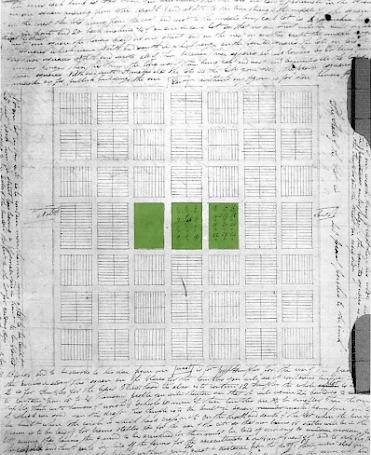
The Plat of Zion is one historic example of this reciprocal relationship between settlement and formation. It was not simply a land plan. It was a proposal for how a community might be physically ordered to support a shared way of life. Its arrangement of blocks, lots, streets, public buildings, agriculture, civic uses, and expansion reflected an understanding that physical form carries social meaning.

That insight remains important.

Every settlement pattern contains an idea of life. A disconnected subdivision contains one idea. A walkable neighborhood contains another. A main street, a village green, a courtyard, a porch-lined street, a civic square, a market hall, a school within walking distance, or a block with a mix of homes and daily needs all suggest different patterns of encounter, responsibility, and belonging.

This does not mean physical design can manufacture community by itself. It cannot. Buildings do not love their neighbors. Streets do not create virtue. Codes do not produce trust automatically. But the physical environment can either support the conditions under which community becomes more likely, or it can make those conditions unnecessarily difficult.

A settlement pattern can shorten distances or lengthen them. It can invite public life or privatize it. It can make daily needs accessible or remote. It can support many household types or only a narrow few. It can make aging in place possible or force people to leave when life changes. It can allow small businesses to begin or require every enterprise to arrive fully capitalized. It can give children, elders, families, singles, workers, and neighbors a shared environment, or it can separate them into isolated compartments.

The Plat of Zion reminds us that physical planning is never only technical. It is formative. The arrangement of land is also an arrangement of relationships.