
Plat of Zion: A Pattern for
Building Human Habitat
The relationship between people and place has long been understood, even if it is not always applied with the seriousness it deserves. The places we build and inhabit shape the way we live. They influence our habits, our relationships, our responsibilities, our sense of belonging, and even our understanding of what community means. At the same time, people also shape place through their choices, customs, buildings, institutions, and daily patterns of life.
This reciprocal relationship between people and place is one of the most important principles in community building. A neighborhood is never merely a collection of buildings. A city is never merely a system of roads, lots, and utilities. Every human settlement carries within it an idea of life. It either supports human connection or weakens it. It either makes common life easier or more difficult. It either strengthens local responsibility or disperses it. It either gives people a pattern for belonging or leaves them to assemble community on their own.
One historic example of this relationship between physical form and human formation is the Plat of the City of Zion, commonly known as the Plat of Zion.

Plat of Zion
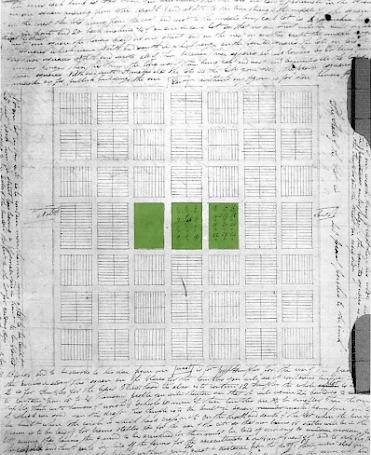
The Plat of Zion was prepared in 1833 under the direction of Joseph Smith and sent to church leaders in Missouri with written explanations for how a new city should be laid out. The original document included not only a physical diagram, but also instructions related to community size, population, blocks, lots, streets, public buildings, building materials, setbacks, agriculture, and the repeatable expansion of the settlement pattern. The Joseph Smith Papers describes the plat as a one-square-mile grid with forty-nine city blocks, 132-foot-wide streets, residential lots, central blocks reserved for public and religious buildings, and surrounding agricultural lands intended to support the population.
The importance of the Plat of Zion is not merely that it was a historic plan. Its greater importance is that it treated settlement as a tool of formation. It assumed that the physical pattern of a community could help shape the moral, social, economic, and spiritual life of its people.
That makes the Plat of Zion highly relevant today.
More Than a Map
A plat is often understood as a technical document. It divides land into blocks, lots, streets, and parcels. It is a tool of measurement, ownership, and legal description. But the Plat of Zion was more than a cadastral instrument. It was a community-building framework.
It addressed the arrangement of homes, the location of civic and religious buildings, the scale of the settlement, the relationship between town and agricultural land, and the conditions under which future settlements could be laid out. It did not simply ask, “Where should buildings go?” It asked, “What kind of community should this physical pattern help produce?”
That question is essential.
Too often, modern development begins with land consumption, circulation, parking, utility extension, and regulatory compliance. These are necessary considerations, but they are not sufficient. A complete human habitat requires more than access, infrastructure, and separated land uses. It requires a physical pattern capable of supporting daily life, neighborly encounter, local exchange, shared responsibility, and a recognizable civic order.
The Plat of Zion attempted to organize these things together.
It was not merely concerned with housing. It was concerned with the relationship between household life and common life. It was not merely concerned with streets. It was concerned with how movement, access, and orientation could serve a larger settlement pattern. It was not merely concerned with public buildings. It placed shared institutions at the center of the city because it understood that a community needs places where its common life can be expressed.
Zion as a Place and a Condition
In Latter-day Saint thought, Zion has both a physical and spiritual meaning. It refers to a place, but also to a condition of unity, righteousness, mutual care, and covenantal life. This recognition correctly identifies a dual nature: Zion is not only built with streets and buildings; it must also be built through the character, habits, and relationships of the people who inhabit it.
This distinction is important.
Physical form alone cannot create a righteous or flourishing people. A good plan does not guarantee a good community. Buildings cannot substitute for virtue, and streets cannot force neighborliness. But the opposite is also true: even the strongest moral aspirations can be frustrated by a physical environment that isolates people, separates daily needs, eliminates shared space, and makes ordinary human interaction difficult.
A community requires both “hardware” and “software.” The hardware includes streets, blocks, buildings, lots, public spaces, civic institutions, and the arrangement of land. The software includes people, customs, faith, responsibility, agency, habits, memory, and shared purpose.
““We can think of the requisite components of community, therefore, in terms of hardware and software. Hardware refers to the buildings and other physical aspects of a particular place. Software refers to the people who enact the communal activities and practices in that place. Another term for the software component is agent. The question of who causes (or prevents) community from forming is a question of agency.””
The genius of the Plat of Zion is that it recognized the need for both.
It did not imagine people as passive products of their surroundings. But neither did it imagine that place was irrelevant to human formation. It understood that the built environment can either support or undermine the kind of life a people is trying to live.
Agency and the Built Environment
One of the most important theological ideas connected to the Plat of Zion is agency. Human beings are not merely creatures of circumstance. They are capable of choice, responsibility, learning, improvement, and creation. They can act upon the world rather than simply be acted upon by it.
But agency does not operate in a vacuum.
The physical environment can expand or constrain the range of choices available to people. A community that allows people to walk, gather, trade, worship, learn, farm, build, and participate in public life offers a different set of choices than one that isolates every household, separates every use, and requires every daily need to be reached by automobile.
This is where the Plat of Zion remains instructive. It organized the physical setting of life in a way that attempted to support higher forms of human agency. It gave households a place. It gave public life a center. It connected the settlement to productive land. It established a repeatable pattern for growth. It treated the community itself as a context for learning, responsibility, and mutual care.
In modern terms, the question becomes: are we building places that increase people’s capacity to live well together, or are we building places that make shared life unnecessarily difficult?
The City as a Human Habitat
The Plat of Zion should be understood as a human habitat plan.
A habitat is not simply a shelter. It is the environment in which life is sustained. For human beings, habitat includes more than biological survival. It includes family, work, worship, education, commerce, food, mobility, culture, memory, public life, and belonging.
A complete human habitat must therefore do several things at once. It must provide places to live, but also places to gather. It must accommodate private life, but also public life. It must support individual households, but also the community as a whole. It must recognize the economic needs of daily life, the ecological realities of land, and the social need for connection.
The Plat of Zion attempted to hold these dimensions together.
Its central blocks were reserved for temples, storehouses, and community institutions. Its residential blocks provided household lots in an ordered pattern. Its agricultural lands were located outside the city but tied to the life of the settlement. Its instructions contemplated future growth through the laying out of additional settlements according to the same general pattern.
This was not sprawl. It was not random expansion. It was not the scattering of isolated houses across the landscape. It was settlement with form, center, edge, purpose, and repeatability.
Pattern, Scale, and Limit
One of the most significant principles embedded in the Plat of Zion is the idea of scale.
The city was not imagined as endlessly expanding outward without limit. It had an intended size and population. When that pattern was complete, another settlement could be laid out. The original explanation included the instruction that when one square was laid off and supplied, another could be laid off in the same way. This was one of the central community-building principles of the plat.
This matters because healthy settlement requires limits.
A neighborhood should be large enough to sustain daily life, but small enough to remain legible. A community should be able to grow, but growth should occur by forming complete places rather than endlessly stretching incomplete ones. A settlement pattern should allow expansion, but expansion should not destroy the coherence of the original place.
The Plat of Zion’s repeatable pattern points toward a principle that remains valuable: growth should occur through the multiplication of complete communities, not the endless extension of disconnected fragments.
The Center Matters
The Plat of Zion placed public and religious buildings at the center of the settlement. In its original religious context, this reflected the centrality of worship, instruction, and ecclesiastical order. But the planning principle has wider applicability.
Every community needs a center.
A center gives a place identity. It provides orientation. It creates a shared point of reference. It concentrates public life. It allows common institutions to be seen and accessed. It gives residents a place where the community becomes visible to itself.
Modern development often lacks this. Subdivisions may have entrances, signs, amenities, and clubhouses, but they frequently lack a true civic center. Commercial corridors may have stores, but not a public heart. Apartment complexes may have units and parking, but not a meaningful public realm. Master-planned communities may have branding, but not a deeply ordered civic structure.
The Plat of Zion reminds us that a settlement should not be centerless.
A community without a center is more easily reduced to a collection of private interests. A community with a center has a place where shared life can be located, expressed, and renewed.
The Household and the Community
The Plat of Zion also organized the relationship between household life and community life. Each household had a lot, but those lots were not scattered randomly across the countryside. They were arranged within the city. The surrounding agricultural lands supported the settlement, but residents were to live in the city rather than disperse across isolated farms. The Joseph Smith Papers notes that the plan depicted an urban-agrarian center designed for property distribution, community cohesion, access to worship and schoolhouses, and nearby agricultural land.
This is an important distinction.
The plan valued land and production, but it did not equate self-sufficiency with isolation. It recognized the importance of proximity. People could work the land, but they were still to belong to a community. Household life was honored, but it was placed within a larger civic and spiritual order.
That balance remains essential. A good human habitat must protect the household while also connecting the household to something larger than itself. It must provide privacy without producing isolation. It must support property without dissolving community. It must allow individual responsibility while also creating conditions for mutual care.
Productive Land and Community Life
Another important feature of the Plat of Zion is the relationship between the city and its productive landscape. Agriculture was not treated as unrelated to settlement. It was part of the community’s support system, even though barns, stables, and agricultural structures were to be located outside the residential core.
This reflects a broader principle: a community should have some meaningful relationship to its own provision.
Modern communities are often designed almost entirely as places of consumption. They depend on distant food systems, distant employment centers, distant commercial corridors, distant infrastructure, and distant decision-making. This creates convenience at one scale but fragility at another. When daily needs are disconnected from the neighborhood, the neighborhood loses part of its social and economic function.
The Plat of Zion points toward a more integrated view. A settlement is healthier when it participates in its own support. Today, that does not mean every community must be agrarian in the same way. But it does suggest that neighborhoods should recover local economic capacity: small shops, markets, workshops, schools, gardens, services, civic rooms, and places where people can participate in the life and provision of the community.
A complete place is not merely where people sleep. It is where life is supported.
Public Life Requires Physical Form
The Plat of Zion also teaches that public life requires a physical setting.
A community cannot gather nowhere. It cannot teach nowhere. It cannot worship nowhere. It cannot deliberate nowhere. It cannot care for its members nowhere. Public life requires rooms, buildings, streets, squares, thresholds, and paths. It requires places where people can be seen, known, and remembered.
The form of a place either makes these things easier or harder.
When streets are too hostile, people withdraw. When buildings are too isolated, encounter declines. When daily needs are too distant, public life is reduced to scheduled events rather than ordinary habits. When civic institutions are hidden or absent, the community loses its visible expression. When land uses are separated so completely that every activity requires a trip, the social fabric becomes thinner.
The Plat of Zion is valuable because it understood that community formation is not only a matter of belief or intention. It is also a matter of arrangement.
A Precedent for Form-Based Thinking
Although the Plat of Zion predates modern planning language, it contains ideas that resemble what today might be called form-based planning.
It did not merely identify land uses. It addressed the physical structure of the community. It considered the size of blocks, the arrangement of lots, the width of streets, the placement of buildings, the location of common institutions, the relationship between residential life and agricultural land, and the repeatability of the settlement model.
That is fundamentally different from a system that merely separates uses into zones.
Use matters, but use alone does not create place. A neighborhood is shaped by the relationship between buildings, streets, lots, frontages, public spaces, institutions, and landscape. The same “use” can produce very different results depending on its form. A school can be a walkable neighborhood anchor or an isolated campus surrounded by parking. A store can be a main street storefront or a pad site behind a drive aisle. A home can participate in the life of the street or retreat from it entirely.
The Plat of Zion reminds us that the physical pattern is not incidental. It is the carrier of civic life.
Lessons for Contemporary Community Building
The Plat of Zion should not be copied uncritically. Its historical, religious, cultural, and geographic context was specific. Its street widths, settlement assumptions, and institutional structure do not translate directly into every modern condition. The Joseph Smith Papers notes, for example, that the plat included 10 acre bo=locks and 132-foot-wide streets - dimensions that requires careful interpretation when considered through contemporary pedestrian, transportation, and urban design standards.
The enduring value of the Plat of Zion is not that every community should reproduce its geometry. Its value is that it demonstrates the importance of a complete settlement pattern.
It teaches that a community should have a center.
It teaches that household life and public life should be related.
It teaches that land should be organized with moral, social, and practical purpose.
It teaches that growth should occur through coherent expansion rather than formless sprawl.
It teaches that public institutions need physical presence.
It teaches that productive land, daily life, and community form should not be treated as unrelated systems.
It teaches that the built environment can either support or frustrate the kind of people a community hopes to become.
These lessons remain urgently relevant.
From Subdivision to Settlement
One of the great challenges of modern development is that we have become very good at producing subdivisions, but much less capable of producing settlements.
A subdivision divides land. A settlement orders life.
A subdivision can be approved without ever asking what kind of community it will create. A settlement must ask how homes, streets, institutions, commerce, landscape, and public life belong together. A subdivision may satisfy a checklist. A settlement must satisfy the deeper needs of human habitation.
The Plat of Zion belongs to the tradition of settlement thinking.
It began with a vision of community and translated that vision into a physical pattern. That is the sequence modern planning and development must recover. Before land is consumed, it should be understood. Before lots are drawn, the life of the place should be imagined. Before streets are engineered, the relationships they are meant to support should be considered. Before codes are written, the desired pattern of community should be clear.
The question is not simply, “What can be built here?”
The better question is, “What kind of life should this place make possible?”
The Relevance of the Plat of Zion Today
The Plat of Zion remains relevant because it offers a way to think about community as an integrated whole.
It does not separate physical planning from moral purpose. It does not separate household life from public life. It does not separate settlement from land. It does not separate growth from pattern. It does not separate people from place.
For contemporary planners, developers, civic leaders, and citizens, the lesson is not to reproduce the Plat of Zion as a literal template. The lesson is to recover its ambition.
We should build places that have centers.
We should build places where daily life can occur at a human scale.
We should build places where households are connected to public life.
We should build places where land, economy, ecology, and community are understood together.
We should build places where growth strengthens the whole rather than dissolving it.
We should build places that help people become better neighbors, better citizens, and better stewards of the places they inhabit.
The Plat of Zion matters because it reminds us that community is not accidental. It must be formed. It must be ordered. It must be physically supported. It must be cultivated through both people and place.
A city is never just a diagram.
A neighborhood is never just a real estate product.
A human habitat is a pattern of life.
And the best communities are those whose physical form helps people live in right relationship with one another, with the land, and with the larger purposes that give life meaning.